
Stand up for your choices before your choices are made for you. http://farmageddonmovie.com/
Monthly Archives: June 2011

Are you eating enough food?
1
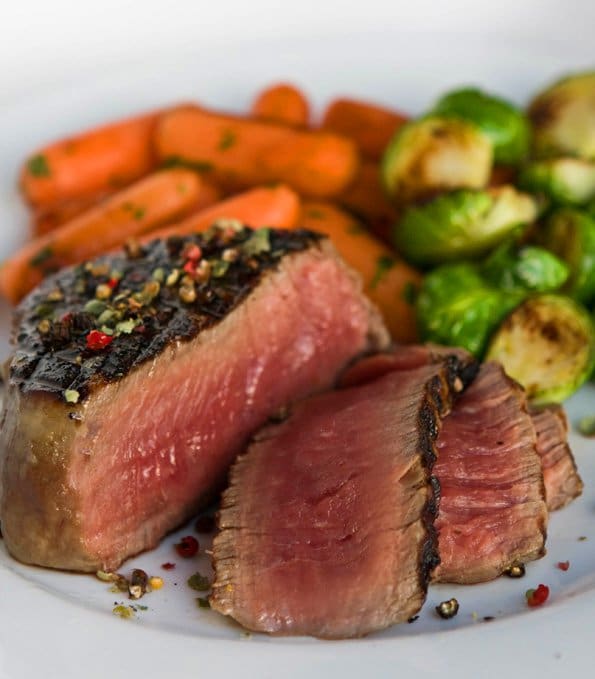
mmm.... steak
One of the big problems a lot of people have when they first wean themselves off of processed and high-caloric foods and transition to foods that are low calorie but nutritionally dense is understanding exactly how much food you have to be eating. It certainly was a shocker for me. But let’s not kid ourselves – it’s a lot of food. Removing those calorie dense foods from our diet leaves us at a calorie deficit that we have to rectify. And the easiest way to do that is to bring on the fats.
Broadcast:

Professor Cordain’s Response to the US News Article about top 20 diets
This is important stuff, people. This is the SCIENCE behind health, well being, and general wellness. This is not about some touchy feely BS diets that ‘make you feel good because you can eat whatever you want, regardless of the actual health benefits (or detriments). The response is kind of long, but it’s important, and contains works cited at the end.
Per Robb Wolf’s blog:
Broadcast:
Burpees for Peru
Aside
Do some Burpees for Peru. Help with the fundraiser, get a little exercise, and get a T-Shirt. http://academyoflions.com/events/project-amedeos-peru-trip-burpees-for-peru/
Broadcast:
My ChooseMyPlate – Part 1 – Deconstruction of ChooseMyPlate

My MyPlates
Many of you by now have seen the new USDA ChooseMyPlate recommendations, where they eschew the near ubiquitous “Food Pyramid” for something much more nebulous – 4 roughly sized areas on a plate of indeterminate size, complete with another area off to the side to represent dairy. On the plate are the usual suspects – Vegetables, Fruit, Grains, and Protein (not meat, because we have to be sensitive to the people that choose not to eat meat. To do otherwise would be at the very least rude, and we can’t ignore protein completely. So we instead name that section after not the type(s) of food you eat (meat, nuts, dairy, tortured-vegetable-protein byproduct), but instead the macronutrient that the foods replace. Great. Should we do that with the other stuff? Nah, because then we would have the following: Protein, carbohydrate, carbohydrate, carbohydrate, and that would just look funny and a little sad.
Broadcast:

My submission to Mark’s Daily Apple’s workout of the week.

Weighted squats... because you never know.
This was my submission to Mark’s Daily Apple’s DIY WoW. I hope you all enjoy it.
Good morning, world.
Warm up: Place both feet on ground and move into a squatting position. While squatting, raise arms, bending slightly at waist to stretch muscles under arms on back and ribcage. Crawl hands out until in a push up position and lower body to ground. Push arms up, leaving hips on the ground. Drop back down to ‘gravitationally inert plank’ and breathe deeply. Walk your hands backwards, lifting your body in a pike position until you can push yourself to a stand.
Now it’s time for some movement. Start with a series of high-knee walks and exaggerated saddle walking (knees way out to the side, stretching the connective tissues in the groin). While doing the high knee walks and saddle walk, work your shoulders and elbows, rotating them in both forwards and backwards directions. Increase movement to a normal jog (on the toes, people!) and get the blood flowing through your body.
Now let’s get started. Lift something heavy up to your shoulders (placing it behind your neck atop your traps). Weight will vary depending on your physical capabilities, but it should be heavy enough to strain, but not so heavy that you can’t do the motion – 20 stationary lunges (10 each leg). Focus on quality form over quantity of weight – we ultimately want everything as neutral as possible. I will be using around fifty pounds.
From there, drop the weight (I’m using a sandbag) and drop your body into a plank.
Begin 50 pushups, focusing on chaining as many as you can together. Again, focus on full range of motion, making sure to touch your chest to the ground. Keep a consistent pace, but you don’t have to time yourself (you can – and I think should for an added challenge/metric).
Now do 15 burpees, again focusing on quality over speed.
Finally, 50 situps.
Ideally this should all be timed, so you can go back in 3 months and test yourself again.
Sorry, forgot to add: Walk a quarter mile to cool down. On stretching and recovery, focus on legs, particularly hip flexors, back, quads, and hamstrings. Some attention should be put on the shoulders, arms, and core because 50 is a good amount of pushups and situps.

 Primal Fringe